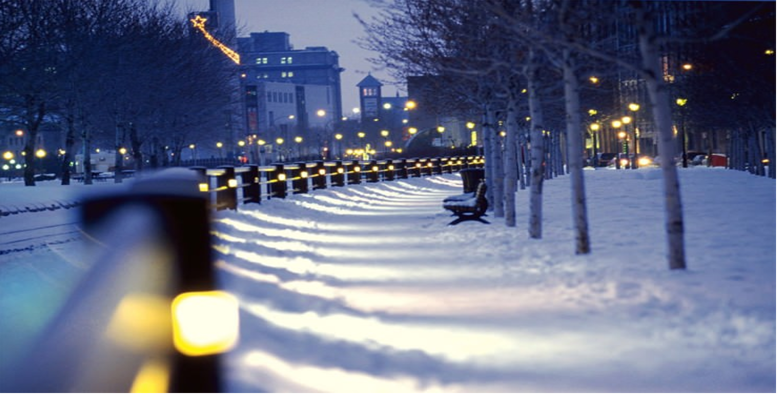
❄️ Winter in Canada 🍁 (With Temperatures)
Winter in Canada is long, cold,
and very beautiful. It usually starts in November and lasts until March,
with January being the coldest month. Snowfall, icy roads, and cold air
are common, but winter temperatures are different in each province, territory,
and city.
In Western Canada, winters
change by location. Vancouver and Surrey (British Columbia) have mild
winters with temperatures around 0°C to 7°C, and more rain than snow. Victoria
is the warmest city in winter, around 3°C to 8°C. In Alberta,
cities like Calgary and Edmonton are much colder, usually –10°C
to –30°C, with heavy snow and cold winds.
The Prairie provinces—Saskatchewan
and Manitoba—have some of the coldest winters. Cities such as Regina,
Saskatoon, and Winnipeg often experience temperatures between –20°C and
–35°C, and sometimes even colder during cold waves.
In Central Canada, winters
are cold and snowy. Toronto, Mississauga, and Brampton usually have
winter temperatures from –5°C to –15°C. Ottawa and Montreal
are colder, around –10°C to –25°C, while Quebec City can drop to –30°C.
In Atlantic Canada,
winters are cold, snowy, and windy. Cities like Halifax, St. John’s,
Moncton, and Charlottetown usually experience temperatures between –5°C
and –15°C.
The northern territories—Yukon,
Northwest Territories, and Nunavut—have extremely cold winters. Cities such
as Whitehorse, Yellowknife, and Iqaluit often see temperatures from –25°C
to –45°C.
Canadians prepare well for winter
by wearing warm clothing and heating their homes. Even though winter in Canada
is cold, it is also calm, organized, and very scenic. With the right
preparation, winter life in Canada can be comfortable and enjoyable 🍁❄️
|
|