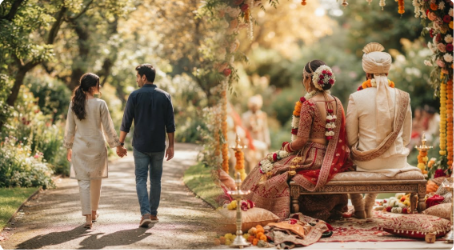
Marriage is one of the most important decisions in a person's life. It is not simply about two people coming together; it is about two individuals deciding to share their dreams, responsibilities, happiness, challenges, and future. Around the world, people approach marriage differently. Some believe in finding love first and then getting married, while others trust their families to help them find a suitable life partner.
This brings us to an interesting question: Love Marriage vs Arranged Marriage – Which One Is Better?
The answer is not as simple as choosing one over the other. Both approaches have their own beauty, challenges, expectations, and opportunities.
What Is a Love Marriage?
A love marriage happens when two individuals meet, develop feelings for each other, understand one another, and eventually decide to get married.
In most cases, the couple spends time together before marriage. They discover each other's personalities, interests, ambitions, habits, and emotional needs. Their decision is generally based on mutual attraction, friendship, understanding, and love.
One of the biggest advantages of a love marriage is that both individuals have usually made their choice independently. They have had opportunities to understand each other before making a lifelong commitment.
However, love alone does not guarantee a successful marriage. Everyday responsibilities, financial decisions, family expectations, differences in opinion, and changing priorities can sometimes create challenges.
A successful love marriage requires patience, respect, communication, and the willingness to grow together.
What Is an Arranged Marriage?
An arranged marriage is a traditional approach in which families, relatives, or matrimonial platforms help individuals find a suitable life partner.
In many cultures, particularly in India and other parts of South Asia, arranged marriages have been an important part of society for generations.
Families often consider factors such as education, family background, cultural values, financial stability, lifestyle, and compatibility.
In modern arranged marriages, however, the process has changed significantly. Couples are increasingly encouraged to meet, communicate, understand each other, and make their own decisions before agreeing to marriage.
One advantage of an arranged marriage is the involvement of families who may bring experience, guidance, and a broader understanding of long-term compatibility.
But family approval should never replace individual choice. Both people must willingly agree and feel comfortable with the decision.
Love Marriage: The Beauty of Choosing Your Partner
The most beautiful aspect of a love marriage is the freedom to choose someone based on personal feelings and understanding.
Imagine two people who have known each other for several years. They have shared laughter, celebrated achievements, supported each other during difficult times, and discussed their future.
When they decide to marry, they are not beginning their journey as complete strangers. They already have memories and experiences together.
This familiarity can help build emotional closeness.
However, couples must understand that dating and married life are not always the same. Marriage introduces responsibilities that require maturity, compromise, and teamwork.
The real test of love is not simply how two people feel during happy moments, but how respectfully they handle difficult situations.
Arranged Marriage: The Beauty of Discovering Love
An arranged marriage offers a different kind of journey.
Two individuals may initially meet without knowing much about each other. Their relationship gradually develops through conversations, shared experiences, and mutual understanding.
Sometimes, friendship develops into affection, and affection eventually becomes deep love.
There is something beautiful about discovering a person's personality over time.
In certain arranged marriages, families also provide emotional and practical support, particularly during the early stages of the relationship.
However, compatibility cannot be judged only by family reputation, education, financial background, or social status. The couple must understand each other's values, expectations, and personalities.
An arranged marriage should be a partnership between two individuals, not simply an agreement between two families.
The Real Challenges: Love vs Arranged Marriage
Both types of marriage face challenges, although the circumstances may differ.
In love marriages, differences in family backgrounds, cultural expectations, financial priorities, and personal ambitions can sometimes become sources of disagreement.
In arranged marriages, couples may need more time to understand each other's habits, communication styles, emotional needs, and expectations.
In either situation, unrealistic expectations can create disappointment.
Some people believe that love marriages require less effort because the couple already knows each other. Others assume arranged marriages are more stable because families are involved.
Neither assumption is necessarily true.
A marriage becomes strong when both individuals are prepared to listen, respect differences, communicate honestly, and support one another.
What Actually Makes a Marriage Successful?
Whether a marriage is based on love or family arrangements, certain qualities remain equally important.
Trust: Both partners should feel secure and confident in each other.
Respect: Differences in opinions, careers, interests, and personalities should be respected.
Communication: Honest conversations help prevent misunderstandings and build emotional closeness.
Financial understanding: Discussing savings, expenses, responsibilities, and future goals is essential.
Family balance: Both partners should learn to maintain healthy relationships with their families while respecting their own independence.
Commitment: Marriage is a continuous journey that requires effort from both individuals.
These qualities cannot be guaranteed by the method through which two people get married. They develop through everyday actions and decisions.
So, Which One Is Better?
Perhaps the better question is not whether love marriage is superior to arranged marriage, but whether two people are right for each other.
A love marriage without trust and respect can struggle. Similarly, an arranged marriage without understanding and emotional connection can face difficulties.
Some couples find their life partners through love. Others discover love after marriage. Both journeys can lead to beautiful relationships.
The most important thing is that marriage should be a personal choice based on mutual consent, compatibility, emotional maturity, and shared expectations.
Final Thoughts
Love marriage and arranged marriage may begin differently, but their destination should be the same: a relationship built on happiness, trust, respect, and companionship.
Love is not simply about finding the perfect person. It is about building a meaningful partnership with someone who accepts you, supports your dreams, respects your individuality, and stands beside you through life's different seasons.
Ultimately, a successful marriage is not defined by how two people meet, but by how they choose to live, grow, and stand together.
After all, whether love comes before marriage or develops after it, what truly matters is that love continues throughout the journey.